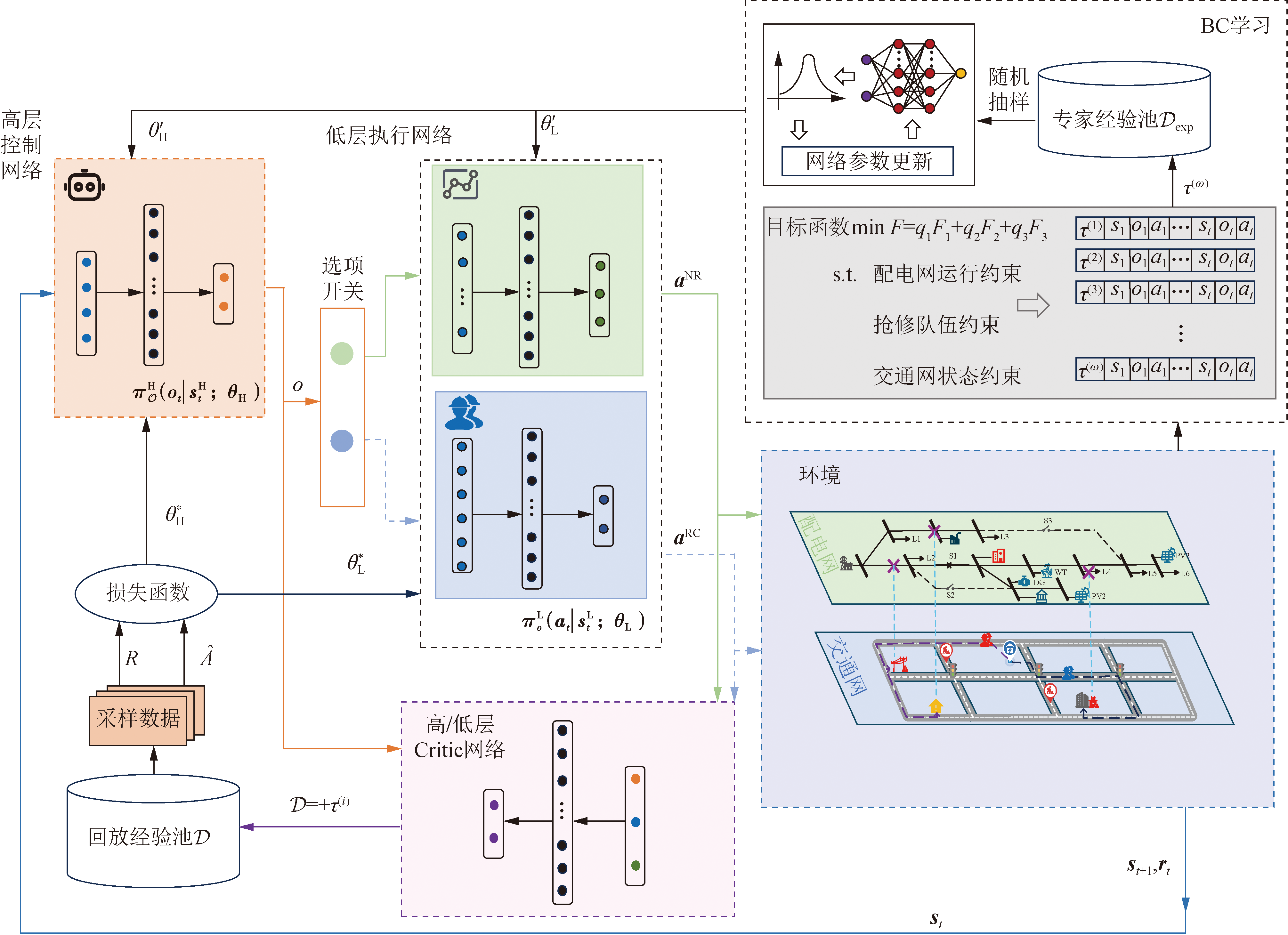
[Objective] Extreme disasters are prone to trigger multi-point faults in distribution networks, and the lack of coordination between network reconfiguration and fault emergency repair will degrade the efficiency of fault restoration. This paper proposes a coordinated post-disaster restoration strategy for distribution networks based on expert experience-guided hierarchical reinforcement learning (HRL). [Methods] Firstly, a decision-making model for post-disaster coordinated restoration of distribution networks is constructed. Taking the minimization of load loss, switch operation cost and maintenance travel cost as the optimization objectives, the model comprehensively considers the operation constraints, network topology constraints and fault repair constraints of distribution networks, as well as the time-varying traffic accessibility constraints of transportation networks. Secondly, targeting the sequential decision-making characteristics of post-disaster restoration, a hierarchical reinforcement learning decision framework consisting of high-level task selection and low-level action execution is established. The high-level layer selects network reconfiguration or repair scheduling tasks according to real-time system states, while the low-level layer generates topology reconfiguration operations, repair task allocation schemes and route adjustment strategies under corresponding constraint conditions. Finally, expert trajectories are adopted to pre-train the policy network, and the parameters of the hierarchical policy are continuously updated through online interactive training. [Results] Random disaster scenario tests on a coupled system of the modified IEEE 33-bus distribution network and the Sioux-Falls traffic network demonstrate that the average cumulative load loss of the proposed method is 5.45 MWh, which is reduced by 22.43% and 29.57% compared with the mixed-integer second-order cone programming (MISOCP) and binary particle swarm optimization (BPSO) algorithms, respectively. The average online solution time of the proposed method is 0.032 7 s, which is significantly lower than that of the comparative methods. [Conclusions] The proposed method realizes the coordinated optimization of post-disaster network reconfiguration and repair scheduling for distribution networks. It exhibits superior performance in reducing cumulative load loss and improving online decision-making efficiency, and can provide auxiliary decision support for the rapid restoration of distribution networks under extreme disaster conditions.
[Objective] In response to the risk of power outage in a single distribution network caused by main transformer fault, this paper proposes a distributed service restoration strategy for interconnected ADNs based on network simplification and topology precomputation.[Methods] First, this paper proposes a partitioning-based simplified modeling method for distribution networks based on boundary measurement data, and establishes a simplified network topology precomputation model that incorporates the tie line and feeder switches to predetermine the optimal states of tie line switches. Second, this paper constructs a global service restoration optimization model of interconnected distribution networks and proposes a distributed service restoration method based on the improved generalized Benders decomposition algorithm. The global optimization model is decomposed into main problem and sub-problem and then solved iteratively between the power outage and normal distribution networks to determine the optimal scheme of other controllable resources. Finally, simulation verification is conducted using two case studies of interconnected distribution networks of different sizes.[Results] In the two-interconnected and three-interconnected distribution network cases, the proposed distributed method converged in 12 and 17 iterations, respectively, achieving a 100% load restoration rate in both outaged networks. Compared with the centralized optimization method, the deviation rates of the global objective function value were approximately 0.1% and 0.02%, respectively. In the three-interconnected case, the computation time of the proposed method was 31.51s, which is significantly lower than the 575.32s of the centralized optimization method.[Conclusions] The proposed simplified topology precomputation method can accurately construct the simplified topology model of interconnected distribution networks and determine the optimal states of both internal and inter-network tie-line switches. When the scale of the interconnected distribution network increases, the distributed service restoration strategy based on the improved generalized Benders decomposition can still converge effectively and obtain a near-optimal restoration scheme that is essentially consistent with that of the centralized optimization method, thereby verifying the effectiveness and accuracy of the proposed method.
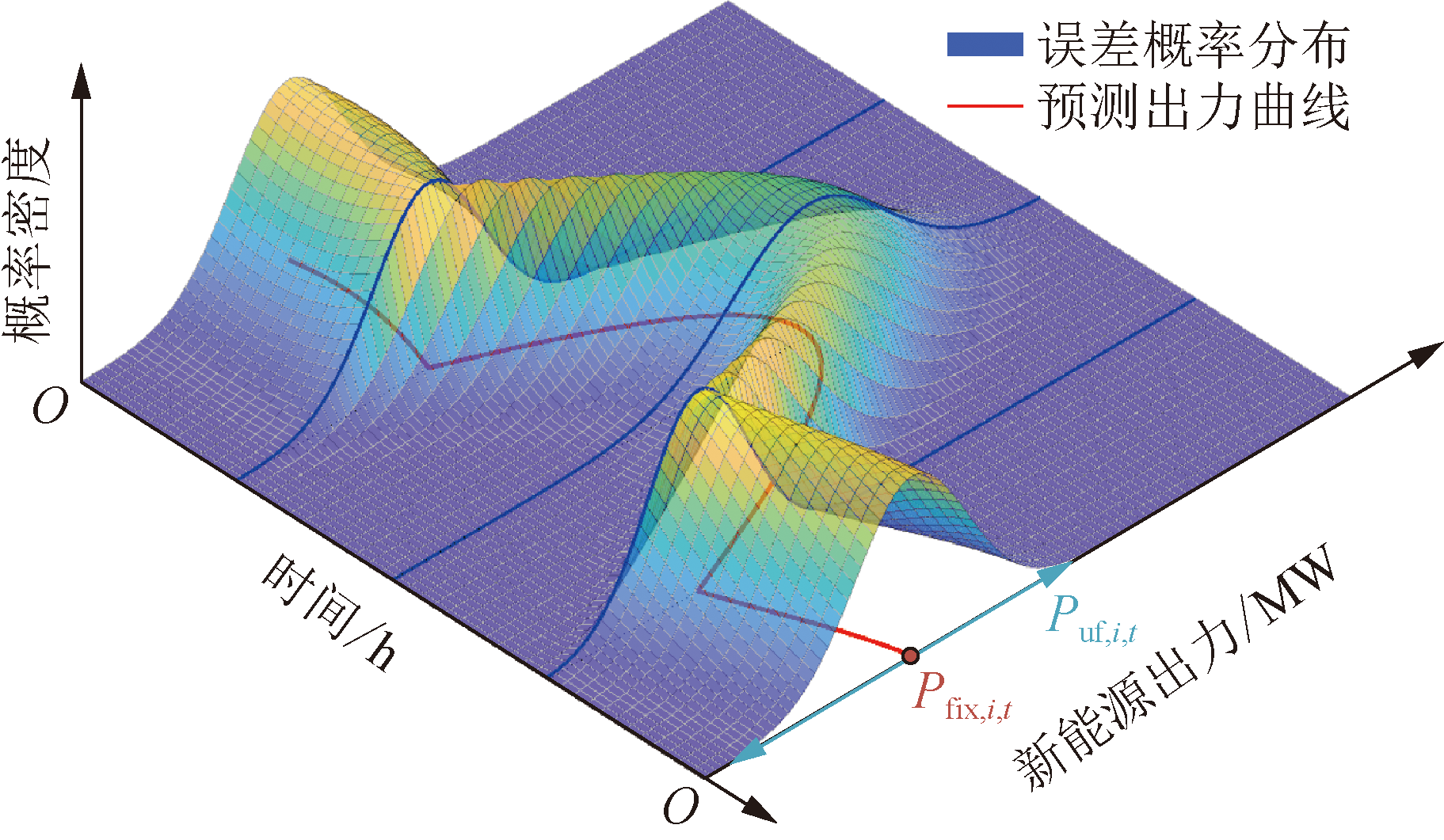
[Objective] With the continuously increasing penetration of volatile renewable energy, the balance mode of the new-type power system exhibits probabilistic characteristics, rendering the traditional fixed-scenario-based power and energy balance analysis inadequate. To improve the representativeness of balance scenarios for actual source-load fluctuations, it is essential to accurately identify the key source-load features that dominate balance conclusions. To this end, this paper proposes a method for identifying the dominant influencing factors of power and energy balance based on time-series dimensionality reduction. [Methods] First, source-load time-series features are defined to implement dimensionality reduction of balance scenarios, addressing the high dimensionality and strong temporal correlation of source-load time-series curves. Then, the multivariate coupling mapping relationship between source-load time-series features and power and energy balance indices is characterized using a data-driven model combined with the Nataf transformation. Next, a global-sensitivity-analysis-based method is proposed to identify the dominant influencing factors of power and energy balance. Finally, a case study is conducted using source-load data of a provincial power grid. [Results] Compared with principal component analysis-based scenario aggregation, the proposed method reduces the calculation error by 27.33% under the Kolmogorov-Smirnov distance metric, which verifies the effectiveness of the proposed method. [Conclusions] The proposed method quantifies the influence of source-load time-series features on power and energy balance indices and enhances the representativeness of typical balance scenarios for source-load fluctuations, thereby providing theoretical and technical support for the balance analysis of renewable energy systems.
[Objective] To address the decline in primary frequency response capability and the resulting threats to frequency security caused by the high-proportion integration of renewable energy,a coordinated planning method for multi-path retrofitting of renewable energy plants and multi-type generation considering frequency security is proposed. [Methods] First,a multi-path retrofit model for renewable energy plants was constructed,including the installation of primary frequency response controllers (PFRCs),grid-following (GFL) energy storage,and grid-forming (GFM) energy storage,so as to characterize the differences among various retrofitting pathways in terms of primary frequency regulation,inertia response,and investment costs. Second,a coordinated planning model was established with the objective of minimizing the total sum of generation investment cost,renewable energy plant retrofit cost,and operational cost. To overcome the difficulty of embedding highly nonlinear frequency deviation constraints into the planning model,an iterative master-subproblem solution framework was developed. The master problem solved the multi-scenario-based generation expansion and renewable energy retrofit decisions,while the subproblem used a system frequency response model to evaluate frequency security indicators. The master and subproblems were linked through physics-informed strengthening cuts derived from three dimensions: regulation power,frequency regulation reserve capacity,and system inertia. [Results] The verification results on the modified IEEE 24-bus system and an actual regional power system demonstrate that the proposed method can obtain the optimal construction scheme while fully exploiting the complementary advantages of diversified renewable energy retrofit pathways. Compared with the conventional planning method,the total cost was reduced by 1.2%,and the renewable energy accommodation rate was increased by 0.4%. Furthermore,as the penetration rate of renewable energy capacity further increases,the system rotational inertia decreases,leading to a significant increase in the configured capacity of GFM energy storage. [Conclusions] The proposed method can effectively coordinate system frequency support performance and overall economic cost,avoid over-investment in conventional coal-fired thermal power plants,and provide a practical and feasible solution to the decline in primary frequency response capability caused by the high-proportion integration of renewable energy.
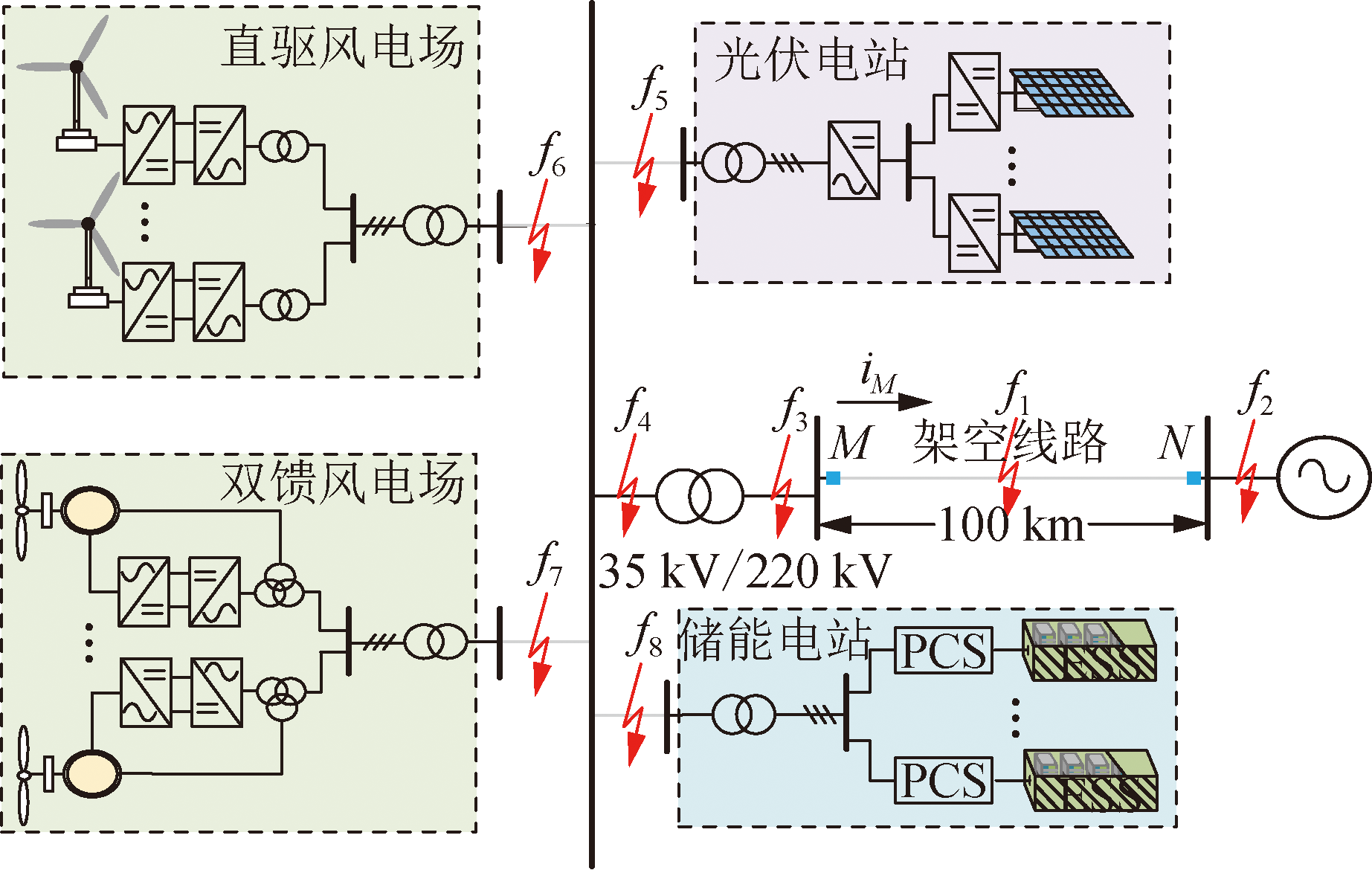
[Objective] Against the background of large-scale renewable energy integration,the fault currents of renewable energy sources exhibit characteristics such as limited amplitude,frequency offset,and phase distortion. This leads to the insufficient adaptability of traditional power-frequency phasor-based protection,making it prone to maloperation or failure to operate. To address this issue,a forward traveling wave pilot protection method based on the post-test simulation principle is proposed. [Methods] Firstly,an analysis of the fault characteristics of renewable energy sources reveals that the fault current characteristics of full-power converter-interfaced sources and doubly-fed induction generators are significantly different from those of traditional synchronous generators,which leads to the poor adaptability of traditional protection. Secondly,the post-test simulation protection principle is proposed,and the voltage and current equations of lossless transmission lines are derived. On this basis,considering the resistance loss of practical lines,the expressions of simulated voltage and current are defined to calculate the quantities from the protection terminals to any internal point of the line. Finally,taking the line midpoint as the simulation point,the simulated forward voltage traveling waves extrapolated from both ends to the midpoint are calculated,and fault identification is achieved based on the waveform differences between internal and external faults. [Results] A simulation model of the wind-PV-storage transmission system is built in PSCAD/EMTDC to verify the applicability of the proposed protection. The results show that the proposed protection requires only a 2 ms data window for fault identification,can tolerate a transition resistance of up to 300 Ω and white-noise interference at a signal-to-noise ratio of 30 dB,and exhibits good adaptability to variations in renewable energy output. [Conclusions] The proposed method is a transient-quantity-based protection method that does not rely on power-frequency phasors and fault current amplitudes. It effectively avoids the adverse impacts of renewable energy fault characteristics on traditional protection,demonstrates good comprehensive performance and engineering applicability,and is suitable for pilot protection of renewable energy outgoing lines.
[Objective] To address the problems of multiple power flow solutions and multiple voltage stability critical points caused by component limiting characteristics, a staged identification method for identifying the minimum voltage stability margin is proposed. [Methods] The minimum voltage stability margin is identified based on the correlation between the voltage stability margin and the violation step length. First, a complementary constraint method is employed to filter out infeasible solutions. Then, a sensitivity analysis is performed to predict the earliest violation behavior and generate a summary list. Finally, the critical solutions in the list are computed in detail to obtain the minimum load margin. [Results] The case study results show that the proposed method has a prediction error of about 2.11% for the first limit violation, and its computation time is reduced by nearly 40% compared with solving the continuation power flow case by case, achieving a balance between identification accuracy and computational efficiency. [Conclusions] The proposed method significantly improves computational efficiency while ensuring solution accuracy, providing a theoretical and model reference for research on multiple solution problems in voltage stability.
[Objective] With the growing demand for efficient energy management, regional integrated energy systems (RIES) urgently need to tap the multi-type flexible regulation potential. However, the benefit allocation among multiple types of participants and the coordinated operation of diverse flexible regulation resources face significant challenges. This paper proposes a coordinated optimization method for multiple flexible resources considering the autonomy capability of sub-regions. [Methods] First, a system operation architecture and trading mechanism are established, covering multiple flexible regulation resources such as energy storage, user-side demand response, and controllable electric/thermal sources. A quantitative index system for regional autonomy capability is proposed and embedded into the operational constraints of sub-regions. Second, a master-slave game-based bi-level coordinated scheduling model is proposed that accounts for the cooperation between the RIES and sub-regional systems (SRS). The RIES supplier and SRS operators act as responsive entities in a single-leader multi-follower game optimization framework. At the upper level, the RIES supplier formulates energy pricing mechanisms with the objective of maximizing revenue, thereby incentivizing SRS followers to actively participate in peak-period regulatory dispatching activities. At the lower level, multiple sub-regional aggregator operators act as followers, performing optimal scheduling with the objective of minimizing daily operational costs while satisfying autonomy capability constraints and coordinating leased energy storage, and feeding back the electricity demand to the upper level. Finally, the effectiveness of the proposed model is verified through case studies. [Results] Compared with the scenario that disregards regional autonomy requirements and lacks energy storage sharing, the proposed method effectively enhances the regulation capability of each sub-region, and the overall system autonomy capability is improved by 3.466%. [Conclusions] The master-slave game-based coordinated optimization method constructed in this paper can effectively leverage the regulation potential of energy storage, providing a feasible solution for improving the economic efficiency and operational performance of multi-sub-regional interconnected systems.
[Objective] The large-scale integration of high-penetration electric vehicles (EVs) into distribution networks inevitably causes voltage fluctuation issues. To solve this problem, this paper proposes a collaborative method for optimal configuration of multi-type vehicle-to-grid (V2G) chargers and coordinated voltage quality improvement of distribution networks. [Methods] This paper establishes a bi-level collaborative optimal scheduling model for charging stations that incorporates the reactive power response characteristics of the residual capacity of multi-type V2G chargers. The upper-level model aims to minimize the annual power purchase cost of EVs and the investment cost of chargers, realizing the collaborative optimization of charging strategies and charger type selection. The lower-level model takes the minimum voltage deviation at the point of common coupling (PCC) of charging stations as the optimization objective, and adopts the residual capacity of chargers to implement reactive power voltage regulation. The bi-level model achieves efficient collaborative operation via active-reactive power decoupling and iterative correction of constraint boundaries. [Results] Simulation results demonstrate that the proposed model can reduce the comprehensive operational cost and effectively improve the voltage profile of distribution networks, with a maximum node voltage quality improvement of 40.46% during peak electricity price periods. [Conclusions] The proposed model well balances the economic benefits of EV charging and the voltage safety of power grids. It verifies the feasibility of V2G chargers in realizing the dual functions of charging service and grid auxiliary support, providing a novel technical solution for chargers to participate in grid ancillary services.
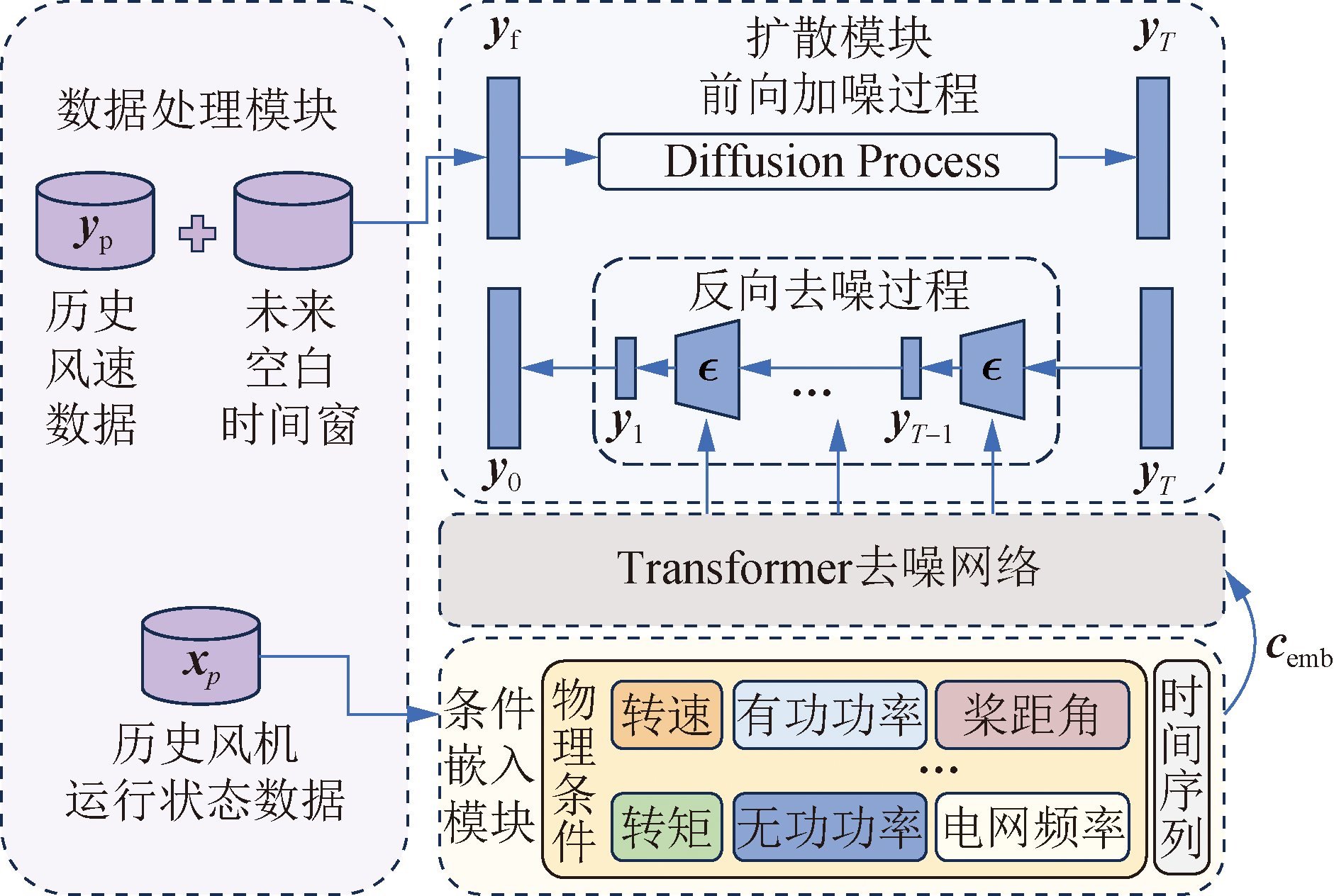
[Objective] High wind penetration reduces system inertia and threatens frequency stability,and the large-scale integration of wind power makes this problem more complex. Gusts are highly fluctuating and random; existing deterministic wind speed prediction methods cannot capture their high-frequency transient features, causing lag and misoperation in rotor speed reserve mode switching and limiting the turbine's transient frequency support capability. To improve frequency regulation,an adaptive switching strategy integrating probabilistic prediction and uncertainty awareness was proposed. [Methods] A second-level gust probabilistic prediction model was built using a denoising diffusion probabilistic model (DDPM)-Transformer architecture, with multi-dimensional turbine state parameters as auxiliary conditions, and Monte Carlo sampling was used to generate probabilistic prediction trajectories. An adaptive switching strategy based on a dynamic confidence corridor was designed, using action and return thresholds as the basis for mode switching. For fuzzy decision scenarios where the confidence corridor crosses the threshold region, the probability of wind speed exceeding the threshold was calculated, and proactive switching between over-speed deloading (OSD) and under-speed deloading (USD) modes was achieved based on the probability threshold. [Results] Simulations based on SCADA data from an offshore wind farm show that the proposed second-level gust probabilistic prediction model outperforms long short-term memory (LSTM) and temporal convolutional network (TCN) models in prediction accuracy. In the adaptive switching strategy, the proposed prediction model advances the average switching point by 3.6 s, significantly improves prediction reliability and response accuracy, and significantly enhances the turbine reserve power margin under gust scenarios. [Conclusions] Through high-confidence probabilistic prediction and uncertainty-aware decision-making, the proposed model and method achieve a shift from passive response to active anticipation for wind turbine speed reserve modes, suppress control misoperations caused by frequent mode switching due to inaccurate gust prediction, maximize transient frequency regulation capability while ensuring turbine safety, and offer a feasible solution for frequency stability control in power systems with high wind penetration.
[Objective] Under the background of the “dual-carbon” goals and the development of new-type power systems, isolated microgrids with high renewable energy penetration face the coexistence of long-term source-load mismatch, short-term power fluctuations, and low-inertia operation risks. To address these issues, the optimal configuration and coordinated operation characteristics of electro-hydrogen hybrid energy storage in microgrids are studied. [Methods] Taking the capacity and power rating of electrochemical energy storage, as well as the capacities of the electrolyzer, hydrogen storage tank, and hydrogen fuel cell as optimization variables, a configuration model with the minimum comprehensive annualized cost as the objective is established. The model considers power balance, equipment operating limits, state continuity, and rate of change of frequency (RoCoF) constraints. An N-1 type extreme disturbance scenario with an instantaneous loss of 20% renewable energy output is adopted to verify the equivalent inertia support capability of the system. On this basis, a sensitivity analysis of hydrogen energy penetration is carried out, and the discrete Fourier transform (DFT) and Parseval’s theorem are used to calculate the frequency-domain energy proportions of energy storage power sequences in intra-day, intra-week, and cross-week-to-seasonal fluctuation intervals. [Results] A case study of an isolated microgrid in Northwest China shows that the comprehensive annualized cost of the electro-hydrogen hybrid energy storage scheme is reduced by 83.38% compared with the pure electrochemical energy storage scheme. Under the extreme disturbance, the available effective inertia of the hybrid energy storage system is always higher than the minimum requirement under the RoCoF constraint. Frequency-domain analysis shows that hydrogen energy storage accounts for 77.7% of the action energy in the long-period interval, while electrochemical energy storage accounts for 88.0% in the intra-day fluctuation interval. [Conclusions] The proposed model can reduce long-period energy storage configuration costs and improve the operational economy of isolated microgrids with high renewable energy penetration while satisfying the RoCoF constraint in the initial stage of disturbance and the annual energy balance requirement. For isolated microgrids with significant seasonal source-load mismatch, hydrogen energy storage is more suitable for cross-period energy transfer, whereas electrochemical energy storage is more suitable for intra-day power smoothing and inertia support.
[Objective] To address the seasonal supply-demand mismatch and short-term power fluctuations in park integrated energy systems (PIES) with high-penetration renewable energy, this paper proposes a robust optimal scheduling strategy for ammonia‑storage PIES that explicitly considers seasonal complementarity. [Methods] First, an electricity‑ammonia‑cooling‑heating cascade utilization model is developed to fully exploit the dual roles of ammonia as both an energy storage medium and a working fluid. Second, a state‑guided multi‑time‑scale coordination mechanism is designed, in which the upper‑layer seasonal planning and the lower‑layer two‑stage robust scheduling are dynamically coupled to resolve the long‑term and short‑term decision coordination challenge. Finally, the column‑and‑constraint generation (C&CG) algorithm is employed to solve the proposed model. [Results] Simulation results demonstrate that, compared with the benchmark scenario without ammonia storage, the proposed strategy effectively reduces the annualized operating cost and enhances the wind power accommodation rate. Under extreme scenarios, it significantly lowers the load‑shedding risk with only a modest cost increase. [Conclusions] By leveraging the multifunctional utilization of ammonia energy and multi‑time‑scale coordination, this method offers both theoretical support and engineering guidance for the economical and flexible operation of PIES.
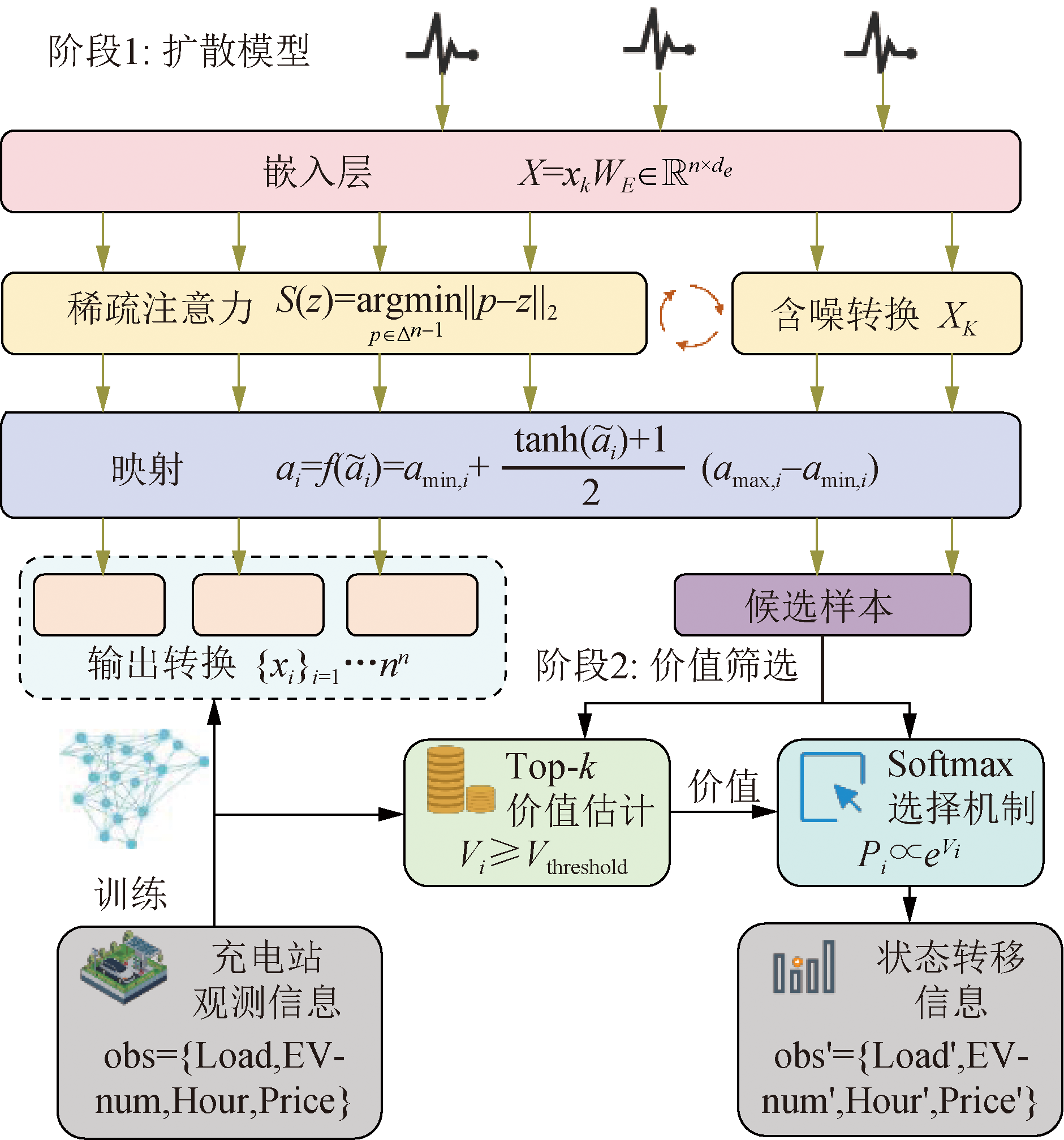
[Objective] To address complex interactions and scarce training samples in collaborative pricing among multiple charging stations under large-scale random EV access, this paper proposes a method integrating Transformer-based DDPM data augmentation with multi-agent deep reinforcement learning to expand the sample space for pricing policy learning under complex conditions and optimize multi-agent collaborative pricing strategies. [Methods] A Transformer-based denoising diffusion probabilistic model (DDPM) is first designed. By employing a sparse attention mechanism to capture spatiotemporal characteristics of charging stations and combining Top-k selection with Softmax sampling, the model reconstructs and augments a physically consistent interaction sample space conditioned on historical prices, demand, and temporal features. Then, an interactive environment considering EV spatiotemporal distribution and network constraints is constructed, and a multi-agent deep deterministic policy gradient (MADDPG) algorithm trains collaborative pricing strategies on the augmented set. [Results] Simulation results show the proposed method effectively guides the rational spatiotemporal distribution of charging loads, enhances station revenue and service quality while ensuring distribution network safety. The Transformer-based sample augmentation method significantly expands the sample space for pricing learning and strengthens the strategy’s adaptability to complex interactions. [Conclusions] The proposed approach achieves coordinated optimization among distribution network security, station profitability, and user experience, offering a novel pathway for intelligent multi-agent collaborative pricing in the EV charging market.
[Objective] To address the Stackelberg game between multiple virtual power plants (VPP) and a distribution system operator (DSO), where existing dynamic pricing models fail to adequately account for the impact of renewable energy output uncertainty on game strategies, and conventional solution methods suffer from poor performance in high-dimensional decision spaces, this paper proposes a dynamic pricing model and solution method based on distributionally robust optimization (DRO) within a Stackelberg game framework. [Methods] A Stackelberg game dynamic pricing model is formulated with the DSO as the leader and multiple VPPs as followers. In the VPP optimization subproblem, a distributionally robust chance constraint is introduced to capture wind power output uncertainty. An ambiguity set is constructed using only the first and second moments of wind power, and the chance constraint is transformed into a deterministic equivalent via the Cantelli inequality. Moreover, a neural network-enhanced regional particle swarm optimization (NN‑RPSO) algorithm is proposed, which constructs a predictive model of VPP behavior to replace frequent calls to the lower‑level optimization, and incorporates a regional partitioning strategy to enable efficient search. [Results] The results show that decision‑makers can trade off operational risk against cost by adjusting the risk budget parameters. Compared with the regional particle swarm optimization (RPSO) algorithm, the proposed NN‑RPSO increases the DSO’s revenue by 47.2% while reducing the number of lower‑level model calls by approximately 67.4%. [Conclusions] The proposed DRO model provides decision‑makers with a flexible means to handle uncertainty, and the proposed algorithm markedly enhances solution quality, offering an effective approach for the multi‑agent Stackelberg game problem.
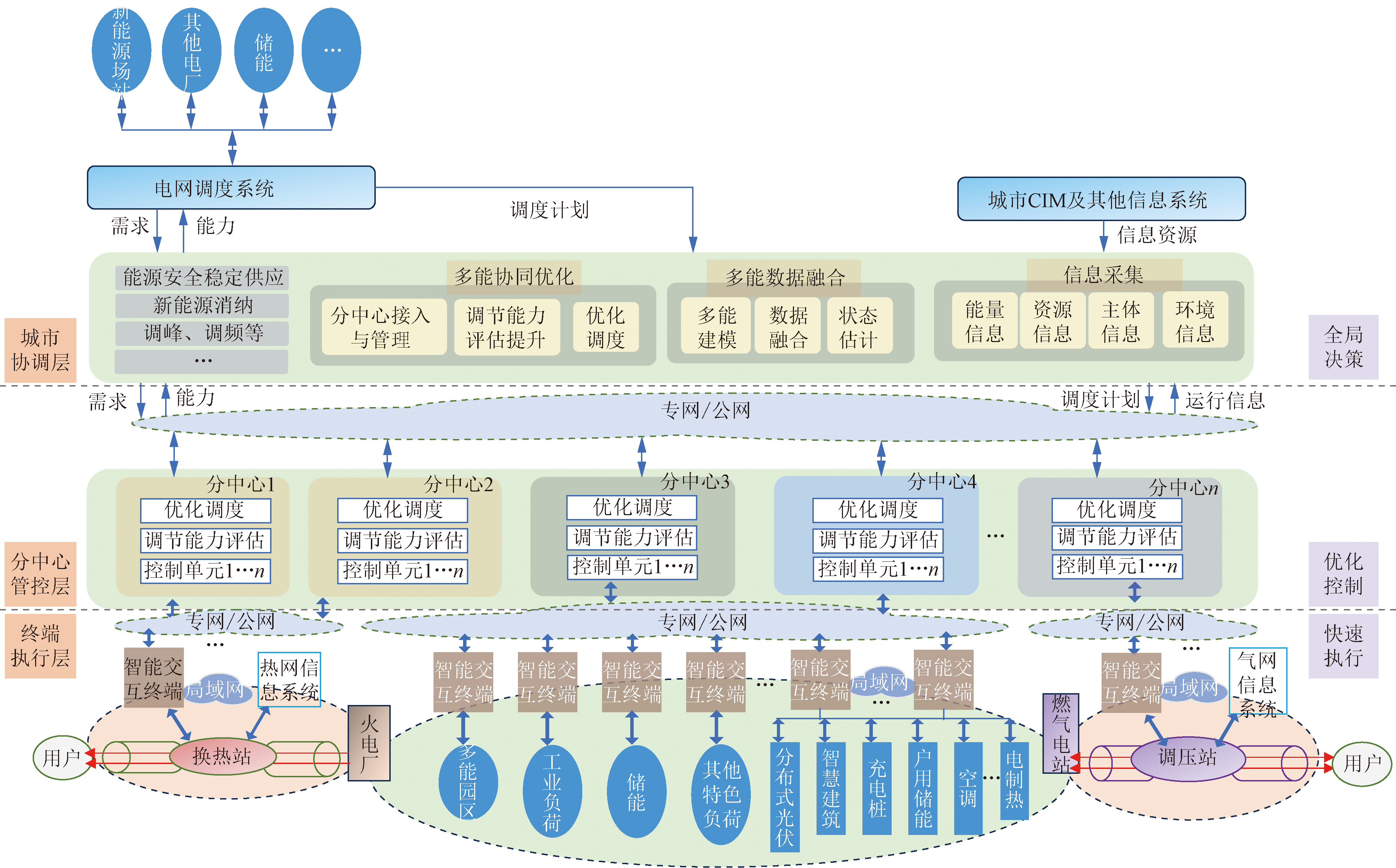
[Objective] Building an electricity‑centered urban energy internet to achieve secure and coordinated multi‑energy operation constitutes an effective approach to tackle the issues of insufficient renewable energy accommodation capacity and low comprehensive energy efficiency in sending‑end urban power grids. To address the practical problems of urban multi‑energy systems, such as large-scale and geographically distributed resources, multi‑agent participation and difficulties in collaborative utilization, this paper proposes an urban‑level multi‑energy security coordinated dispatch and control architecture and its implementation. [Methods] Firstly, this paper analyzes the development trend of urban energy under the new‑type power system. Core tasks, participating agents and resource objects of urban multi‑energy coordination are identified. Practical challenges faced by urban multi‑energy dispatch and control are summarized. By comparing existing typical dispatch architecture modes, an urban‑level multi‑energy security coordinated dispatch and control architecture and corresponding technical indicators are constructed based on the theories of hierarchical decoupling and collaborative governance. Furthermore, the core functions and key technologies of the dispatch system are presented. [Results] The proposed architecture is applied to the practical engineering construction of a city in Northern China. The curtailment of renewable energy on typical days is reduced by 46%, and the multi‑energy utilization efficiency is improved by more than 7%. [Conclusions] While ensuring multi-agent privacy protection and system scalability, the proposed method significantly improves the efficiency and comprehensive benefits of urban multi-energy and multi-agent coordinated dispatch. It provides a feasible technical path for the construction of urban energy internet under high-penetration renewable energy scenarios.
[Objective] To improve the calculation accuracy of the jumper length for six-bundle jumpers in ultra-high voltage direct current (UHVDC) transmission lines and to efficiently achieve prefabricated installation of the jumpers, a precise calculation method for the inclination angle at the end of the tension string and the jumper length is proposed. [Methods] Taking the horizontal tension of the conductor as the reference, the inclination angles of individual connecting components are analyzed sequentially, and the inclination angle at the end of the tension string is calculated using an iterative method. A general calculation model based on a three-dimensional coordinate system is established, and the jumper length is calculated using the catenary formula under the condition that the sag of each sub-conductor of the flexible jumper is uniform. The accuracy of the inclination angle at the end of the tension string, the general calculation model, and the jumper length calculation method is verified using finite element simulation, three-dimensional modeling in AutoCAD, and field measurements. [Results] The proposed iterative method achieves a stable terminal inclination angle after four iterations, and the calculated inclination angles are in good agreement with the finite element simulation results. The suspension points of each jumper obtained using the proposed general calculation model are consistent with the simulated positions generated by AutoCAD modeling. After the prefabricated installation of an actual jumper, field measurements obtained via total station and drone surveys closely matched the calculated values. A jumper installation case demonstrates that, compared with the traditional high-altitude simulation method, the prefabricated approach reduces high-altitude workload by 46.4%, increases work efficiency by 25%, and reduces labor costs by 33.3%. [Conclusions] The proposed iterative method for calculating the inclination angle of the tension string is more accurate than the traditional method that simplifies the tension string as a uniformly distributed self-weight load. The general-purpose program developed for calculating the length of six-bundle jumpers features good graphical user interaction and offers strong practicality and convenience. The prefabricated installation of six-bundle large-cross-section conductor jumpers for UHVDC transmission lines has been successfully realized, achieving the objectives of reducing high-altitude workload, improving construction efficiency, minimizing conductor loss, and ensuring high quality of construction technology.
Author Login
Peer Review