PDF(2848 KB)

Coordinated Planning Method for Renewable Energy Plant Multi-Pathway Retrofitting and Multi-Type Generation Considering Frequency Security
LI Pengzhan, LIU Lu, SUN Chao, CHENG Haozhong
Electric Power Construction ›› 2026, Vol. 47 ›› Issue (10) : 45-61.
PDF(2848 KB)
 PDF(2848 KB)
Coordinated Planning Method for Renewable Energy Plant Multi-Pathway Retrofitting and Multi-Type Generation Considering Frequency Security
[Objective] To address the decline in primary frequency response capability and the resulting threats to frequency security caused by the high-proportion integration of renewable energy,a coordinated planning method for multi-path retrofitting of renewable energy plants and multi-type generation considering frequency security is proposed. [Methods] First,a multi-path retrofit model for renewable energy plants was constructed,including the installation of primary frequency response controllers (PFRCs),grid-following (GFL) energy storage,and grid-forming (GFM) energy storage,so as to characterize the differences among various retrofitting pathways in terms of primary frequency regulation,inertia response,and investment costs. Second,a coordinated planning model was established with the objective of minimizing the total sum of generation investment cost,renewable energy plant retrofit cost,and operational cost. To overcome the difficulty of embedding highly nonlinear frequency deviation constraints into the planning model,an iterative master-subproblem solution framework was developed. The master problem solved the multi-scenario-based generation expansion and renewable energy retrofit decisions,while the subproblem used a system frequency response model to evaluate frequency security indicators. The master and subproblems were linked through physics-informed strengthening cuts derived from three dimensions: regulation power,frequency regulation reserve capacity,and system inertia. [Results] The verification results on the modified IEEE 24-bus system and an actual regional power system demonstrate that the proposed method can obtain the optimal construction scheme while fully exploiting the complementary advantages of diversified renewable energy retrofit pathways. Compared with the conventional planning method,the total cost was reduced by 1.2%,and the renewable energy accommodation rate was increased by 0.4%. Furthermore,as the penetration rate of renewable energy capacity further increases,the system rotational inertia decreases,leading to a significant increase in the configured capacity of GFM energy storage. [Conclusions] The proposed method can effectively coordinate system frequency support performance and overall economic cost,avoid over-investment in conventional coal-fired thermal power plants,and provide a practical and feasible solution to the decline in primary frequency response capability caused by the high-proportion integration of renewable energy.
renewable energy retrofitting / power source planning / frequency security / inertia / primary frequency regulation
系统等效惯性时间常数和各类电源增益系数计算如式(A1)所示。
式中:Pw为新能源场站w的最大可用出力。
式中:
火电、抽蓄、新能源和储能的调频备用计算如式(A3)—(A6)所示。
式中:γg、γh和γe分别为火电、抽蓄和储能的调频限幅,其中火电在额定功率运行状态下仍然可以短暂增加有功功率进行一次调频。
表A1 SFR模型参数物理意义Table A1 Physical meaning of SFR model parameters |
| 参数 | 物理意义 | 参数 | 物理意义 |
|---|---|---|---|
| | 火电再热时间常数 | | GFL储能响应时间 |
| | 高压缸做功比例 | | GFM储能响应时间 |
| | 原动机时间常数 | | 火电频率响应功率 |
| | 调速器时间常数 | | 抽蓄频率响应功率 |
| | 火电机组调差系数 | | 新能源频率响应功率 |
| | 抽蓄响应时间 | | GFL储能频率响应功率 |
| | 抽蓄永久下降率 | | GFM储能频率响应功率 |
| | 抽蓄综合下降率 | | 火电增益系数 |
| | 新能源调差系数 | | 抽蓄增益系数 |
| | GFL储能调差系数 | | 新能源增益系数 |
| | GFM储能调差系数 | | GFL储能增益系数 |
| | 新能源响应时间 | | GFM增益系数 |
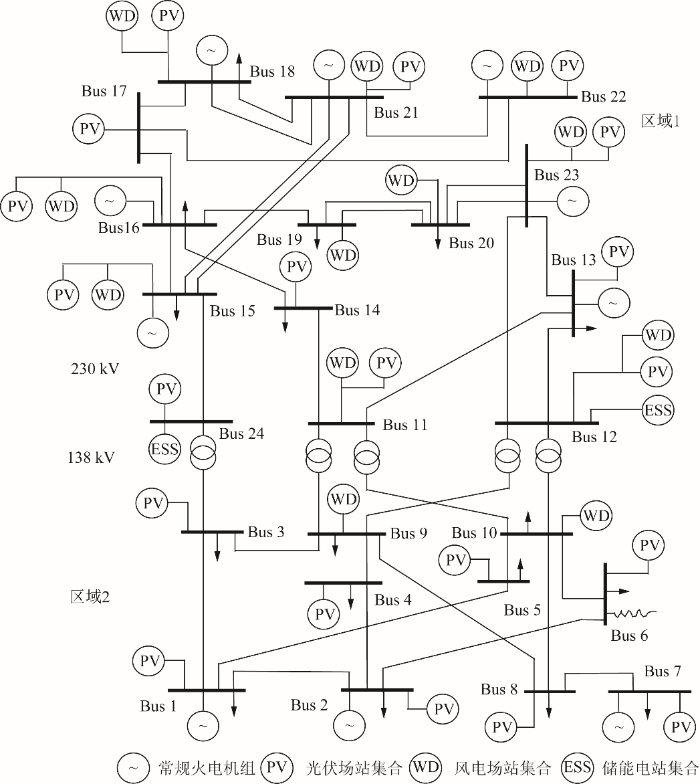
表B1 待改造新能源场站详情Table B1 Details of new energy stations to be retrofitted |
| 场站名称 | 装机容量/MW | 接入节点 | 场站名称 | 装机容量/MW | 接入节点 |
|---|---|---|---|---|---|
| 光伏场站1 | 100 | 5 | 光伏场站18 | 400 | 17 |
| 光伏场站2 | 100 | 6 | 光伏场站19 | 300 | 23 |
| 光伏场站3 | 100 | 7 | 光伏场站20 | 300 | 14 |
| 光伏场站4 | 100 | 8 | 风电场站1 | 100 | 22 |
| 光伏场站5 | 100 | 18 | 风电场站2 | 100 | 23 |
| 光伏场站6 | 100 | 21 | 风电场站3 | 100 | 11 |
| 光伏场站7 | 200 | 1 | 风电场站4 | 100 | 12 |
| 光伏场站8 | 200 | 2 | 风电场站5 | 200 | 9 |
| 光伏场站9 | 200 | 3 | 风电场站6 | 200 | 10 |
| 光伏场站10 | 200 | 4 | 风电场站7 | 200 | 15 |
| 光伏场站11 | 300 | 11 | 风电场站8 | 200 | 16 |
| 光伏场站12 | 300 | 24 | 风电场站9 | 300 | 19 |
| 光伏场站13 | 400 | 16 | 风电场站10 | 300 | 20 |
| 光伏场站14 | 400 | 15 | 风电场站11 | 400 | 21 |
| 光伏场站15 | 500 | 12 | 风电场站12 | 400 | 22 |
| 光伏场站16 | 500 | 13 | 风电场站13 | 500 | 18 |
| 光伏场站17 | 600 | 11 |
表B2 改进的IEEE 24节点系统机组详情Table B2 Details of generation units in the modified IEEE 24-bus system |
| 机组名称 | 装机容量/MW | 接入节点 | 机组名称 | 装机容量/MW | 接入节点 |
|---|---|---|---|---|---|
| 火电机组1 | 20 | 1 | 火电机组18 | 12 | 15 |
| 火电机组2 | 20 | 1 | 火电机组19 | 12 | 15 |
| 火电机组3 | 76 | 1 | 火电机组20 | 155 | 15 |
| 火电机组4 | 76 | 1 | 火电机组21 | 155 | 16 |
| 火电机组5 | 20 | 2 | 火电机组22 | 400 | 18 |
| 火电机组6 | 20 | 2 | 火电机组23 | 400 | 21 |
| 火电机组7 | 76 | 2 | 火电机组24 | 50 | 22 |
| 火电机组8 | 76 | 2 | 火电机组25 | 50 | 22 |
| 火电机组9 | 100 | 7 | 火电机组26 | 50 | 22 |
| 火电机组10 | 100 | 7 | 火电机组27 | 50 | 22 |
| 火电机组11 | 100 | 7 | 火电机组28 | 50 | 22 |
| 火电机组12 | 197 | 13 | 火电机组29 | 50 | 22 |
| 火电机组13 | 197 | 13 | 火电机组30 | 155 | 23 |
| 火电机组14 | 197 | 13 | 火电机组31 | 155 | 23 |
| 火电机组15 | 12 | 15 | 火电机组32 | 350 | 23 |
| 火电机组16 | 12 | 15 | GFL储能电站1 | 60 | 24 |
| 火电机组17 | 12 | 15 | GFM储能电站1 | 10 | 12 |
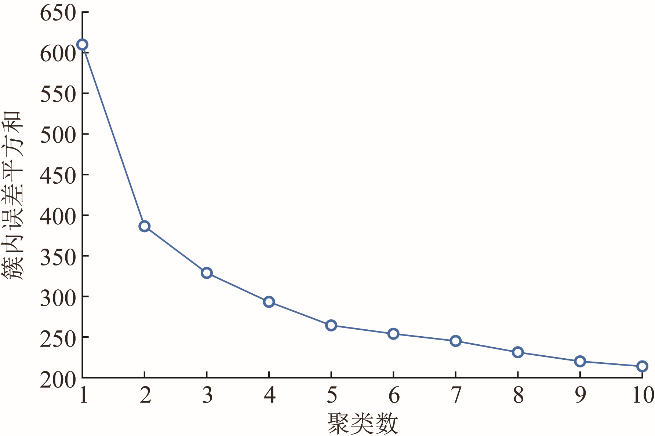
图B1 不同聚类数下误差平方和曲线Fig. B1 Sum of squared errors curve under different cluster numbers |
| [1] |
陈昕钰, 余光正, 陈汝斯, 等. 考虑沙戈荒地区复杂气象因素的超短期光伏功率预测[J]. 电力系统自动化, 2026, 50(2): 83-92.
|
| [2] |
GB/T 40594—2021 电力系统网源协调技术导则[S].
GB/T 40594—2021 Technical guide for power grid and source coordination[S].
|
| [3] |
张嘉琪, 胥国毅, 王程, 等. 考虑同步机调差系数灵敏度与频率约束的机组组合[J]. 电力系统保护与控制, 2023, 51(13): 102-110.
|
| [4] |
樊科, 石庆鑫, 刘文霞, 等. 计及频率安全约束的高比例新能源电网统一多目标优化运行[J/OL]. 华北电力大学学报(自然科学版), 2025-04-11. https://link.cnki.net/urlid/10.1999.TM.20250411.1349.002.
|
| [5] |
张磊, 宋坤泽, 叶婧, 等. 计及惯量和风电双重不确定性的两阶段分布鲁棒机组组合[J]. 电力建设, 2026, 47(2): 147-160.
|
| [6] |
桑顺, 徐王誉, 施刚, 等. 面向柔性互联配电网的构网型风电机组的稳定性分析及频率支撑控制[J]. 供用电, 2026, 43(2):53-63.
|
| [7] |
|
| [8] |
张智, 周明, 武昭原, 等. 考虑动态频率支撑的储能选址定容规划方法[J]. 中国电机工程学报, 2023, 43(7): 2708-2720, 19.
|
| [9] |
于琳琳, 陈姝彧, 张凯南, 等. 考虑最低惯量需求的受端电网储能规划研究[J]. 电网与清洁能源, 2024, 40(10): 149-158.
|
| [10] |
程昊文, 李克成, 柳璐, 等. 基于风光火差异化调频策略的电池储能协同优化配置[J]. 上海交通大学学报, 2025, 59(10): 1407-1418.
多样化调频资源是保障新型电力系统频率安全的有效手段和必然趋势.基于风电、光伏、火电与储能协同的差异化调频策略, 提出一种多场景下耦合长时间尺度规划与短时间尺度机组组合的电源侧电池储能优化配置方法.分别构建火储、风储、光储联合调频策略, 细化配套电池储能的不同功能, 增强其在调频过程中的灵活性.优化模型以风光火储全系统投资与运行成本最小为目标, 将系统可释放的频率响应功率作为安全约束; 通过高阶多机系统频率响应的时域仿真进行校验, 并反馈频率安全割迭代求解. 改进IEEE 24节点系统的算例表明, 所提方法下电池储能可在平抑功率波动、减少新能源弃电与参与电力系统调频之间灵活选择,验证了方法的有效性.
|
| [11] |
王强钢, 石博文, 池源, 等. 基于动态频率安全评估的低惯性系统储能适应性协同规划[J]. 电力系统自动化, 2026, 50(2): 165-176.
|
| [12] |
崔杨, 付大志, 程丁然, 等. 考虑系统惯量需求的常规水电站改造联合纯抽蓄电站容量配置方法[J]. 电网技术, 2025, 49(12): 5292-5303.
|
| [13] |
邱星宇, 吴毓峰, 王梓耀, 等. 计及并离网频率约束的微电网容量优化配置方法[J]. 电力系统保护与控制, 2023, 51(21): 166-177.
|
| [14] |
李鸿鑫, 吴思嘉, 陈大为, 等. 频率安全下受端电网灵活性资源优化配置方法[J]. 广东电力, 2025, 38(7): 55-67.
|
| [15] |
胡泽春, 蔡福霖, 冯建洲. 兼顾新能源消纳与频率电压支撑的电池储能系统优化规划[J]. 电力自动化设备, 2024, 44(7): 3-12.
|
| [16] |
|
| [17] |
|
| [18] |
|
| [19] |
张后谊, 柳璐, 徐玉韬, 等. 计及自适应时间段极端场景频率安全的源网储协同规划方法[J/OL]. 上海交通大学学报,2026-03-14. https://doi.org/10.16183/j.cnki.jsjtu.2025.185.
|
| [20] |
金楚, 李作红, 林勇, 等. 考虑频率安全及风能转移的风电场规划与运行[J]. 电力建设, 2025, 46(3): 155-165.
|
| [21] |
李红刚, 李勇, 李晓宁, 等. 基于储能惯量支撑的高比例新能源基地效益提升优化方法[J]. 山东电力技术, 2025, 52(12): 27-37.
|
| [22] |
黄欣蕊, 郭春义, 张进, 等. 跟网与构网型储能对风-光-水打捆经常规直流外送系统的功率传输能力影响研究[J/OL]. 中国电机工程学报, 2025-11-07. https://link.cnki.net/urlid/11.2107.TM.20251107.0920.004.
|
| [23] |
赵清华, 李明, 李晓龙, 等. 构网型与跟网型储能在弱电网中的暂态响应特性及并网性能研究[J]. 高压电器, 2025, 61(11): 22-33, 44.
|
| [24] |
王冠淇, 裴玮, 熊佳旺, 等. 跟网型和构网型变流器混合系统稳定性分析方法[J]. 中国电机工程学报, 2025, 45(1): 25-37.
|
| [25] |
王双双, 吴雪莲, 李兆伟, 等. 计及构网型新能源主动支撑特性的频率紧急控制适应性分析[J]. 电力工程技术, 2025, 44(2): 80-89.
|
| [26] |
秦本双, 徐永海. 多虚拟同步机并网系统功频振荡模态分析[J]. 中国电机工程学报, 2021, 41(19): 6570-6580.
|
| [27] |
|
| [28] |
刘辉, 于思奇, 孙大卫, 等. 构网型变流器控制技术及原理综述[J]. 中国电机工程学报, 2025, 45(1): 277-296.
|
| [29] |
GB/T 40595—2021 并网电源一次调频技术规定及试验导则[S].
GB/T 40595—2021 Guide for technology and test on primary frequency control of grid-connected power resource[S].
|
| [30] |
DL/T 2246.7—2021 电化学储能电站并网运行与控制技术规范第7部分:惯量支撑与阻尼控制[S].
DL/T 2246.7—2021 Technical specification for grid-connected operation andcontrol of electrochemical energy storage station. Part 7: Inertia support and damping control[S].
|
| [31] |
杨若琳. 含高比例新能源的电力系统源网荷储协同规划及优化运行研究[D]. 南京: 东南大学, 2022.
|
| [32] |
王春义, 杨颂, 魏智超, 等. 基于VSG技术的光伏-储能并网系统协调控制策略[J]. 电网与清洁能源, 2025, 41(12): 118-126.
|
| [33] |
黄润, 刘梓宁, 余强, 等. 考虑全寿命周期效益的风电场站配储能系统参与一次调频服务容量及功率配置优化[J]. 南方电网技术, 2025, 19(4): 122-131.
为应对风电渗透率的提高对电网调频所带来的挑战,从风电场站配储能系统的储能成本、实时电量收益、一次调频收益等方面,建立以储能系统容量和储能系统功率为决策变量的风电场站配储能系统参与一次调频服务全寿命周期成本-收益计算模型。针对一次调频动作量难以精准评估的难点,采用电力系统频率闭环动态过程开环处理方法建立了考虑风电机组控制和储能系统荷电状态(state-of-charge,SOC)约束的风储联合系统调频模型,提出以全年频率曲线为输入的风储联合系统一次调频动作量开环计算方法。通过结合风储联合系统调频仿真模型与风电场全年运行频率和功率数据进行仿真分析,获得了储能系统年储能成本和年一次调频收益的变化规律。结果表明,装机容量为30 600 kW的风电场,当储能功率为4 553.6 kW、储能容量为9 822.6 kWh时风储联合一次调频收益达到最优。
To address the challenges posed by the increasing penetration of wind power on grid frequency regulation, this paper establishes a life-cycle cost-benefit calculation model for wind farms equipped with energy storage systems participating in primary frequency regulation services. The model considers energy storage costs, real-time electricity revenue, and primary frequency regulation revenue, with energy storage capacity and power as decision variables. To tackle the difficulty of accurately evaluating primary frequency regulation actions, a frequency regulation model for the combined wind-storage system is developed using an open-loop processing method based on the closed-loop dynamic process of the power system frequency. This model incorporates wind turbine control and energy storage system state-of-charge (SOC) constraints, and proposes an open-loop calculation method for primary frequency regulation actions using annual frequency curves as inputs. By combining the wind-storage system frequency regulation simulation model with annual operational frequency and power data of the wind farm, the change rule of the annual energy storage costs and primary frequency regulation revenue are obtained. The results show that for a wind farm with an installed capacity of 30 600 kW, the optimal primary frequency regulation revenue is achieved when the energy storage power is 4 553.6 kW and the energy storage capacity is 9 822.6 kWh. |
| [34] |
申家锴, 李卫东, 李正文, 等. 计及一次调频死区与限幅的高比例风电电力系统机组组合[J]. 电网技术, 2022, 46(4): 1326-1334.
|
| [35] |
谭玲玲, 张文龙, 康志豪, 等. 计及惯量响应与一次调频参数优化的新能源基地构网型储能规划[J]. 中国电力, 2025, 58(7): 147-161.
|
| [36] |
刘洋, 邵广惠, 张弘鹏, 等. 新能源参与系统一次调频分析及参数设置[J]. 电网技术, 2020, 44(2): 683-689.
|
| [37] |
王彦婷, 文云峰, 郑文伟, 等. 电力系统临界惯量需求的优化仿真协同评估方法[J/OL]. 中国电机工程学报, 2025-07-24. https://link.cnki.net/urlid/11.2107.TM.20250724.1529.013.
|
| [38] |
赵冬梅, 宋晨铭, 艾彬, 等. 考虑频率安全的输电网-源网荷储一体化系统分布式优化调度模型[J/OL]. 中国电机工程学报, 2026-03-05. https://link.cnki.net/urlid/11.2107.tm.20260304.1624.011.
|
| [39] |
沈赋, 曹旸, 徐潇源, 等. 高比例可再生能源电力系统惯量预测方法研究综述[J]. 电力建设, 2025, 46(8): 116-128.
|
| [40] |
孙超, 柳璐, 张啸虎, 等. 计及混合多馈入直流等效短路比约束的源网协同规划方法[J/OL]. 电力系统自动化, 2026-03-23. https://link.cnki.net/urlid/32.1180.TP.20260323.1042.002.
|
| [41] |
张程铭. 可再生能源接入下考虑频率安全的发输储系统规划方法研究[D]. 上海: 上海交通大学, 2022.
|
| [42] |
毛颖群, 张建平, 程浩忠, 等. 考虑频率安全约束及风电综合惯性控制的电力系统机组组合[J]. 电力系统保护与控制, 2022, 50(11): 61-70.
|
利益冲突声明(Conflict of Interests): 所有作者声明不存在利益冲突。
作者贡献声明(Authors' Contributions): 李鹏展负责模型构建、程序设计、实验验证、论文撰写;柳璐提出研究思路和研究方向,设计论文总体框架,参与论文修订、审核;孙超参与了方案可行性研究和论文修订;程浩忠负责论文最终版修订。所有作者均阅读并同意了论文终稿内容。
/
| 〈 |
|
〉 |